
November 3, 2026
Estrangement and the Holidays: The Grief No One Talks About
The Holidays don't just highlight the empty chair. They wake up the grief of a parent or sibling who's still alive, the inner child who still hopes, and the quiet cost of boundaries most people refuse to name.
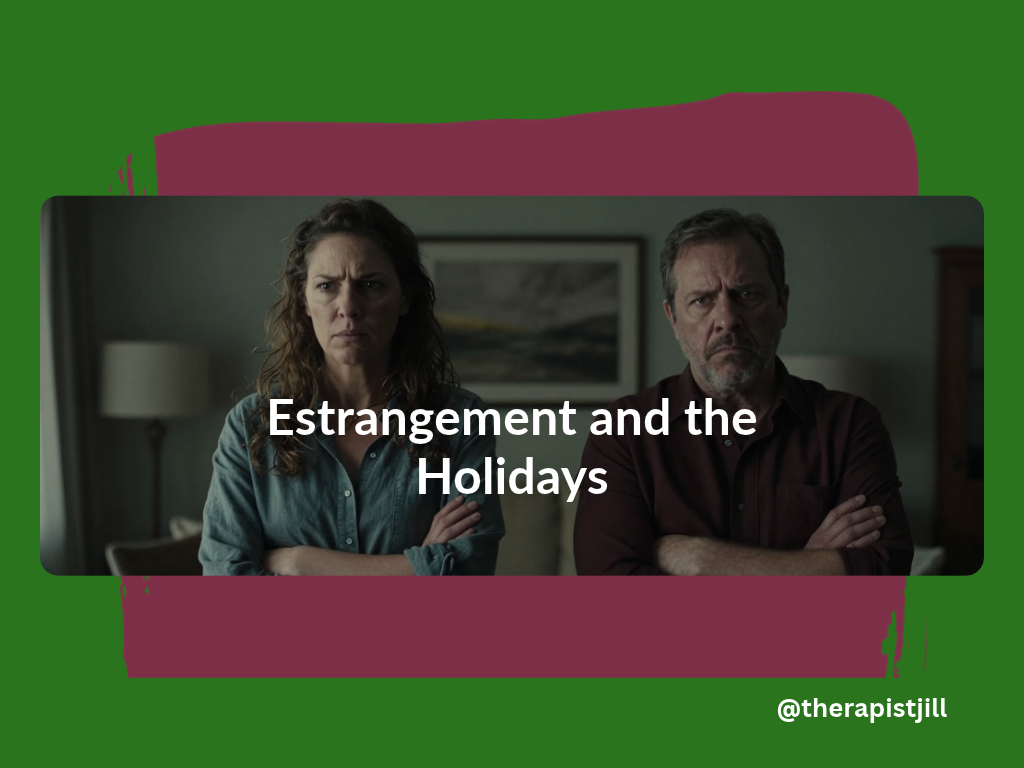
You’re not just skipping dinner. You’re grieving people who are still alive.
The holidays hit, the feeds fill with matching pajamas and full tables, and a quiet part of you starts aching. Not because you’re dramatic. Because the season keeps showing you the family you wanted, the one that never fully existed, and the one you’ve had to walk away from—sometimes a parent, sometimes a sibling, sometimes both.
Most people still treat estrangement like a decision you can reverse if you just “try harder” or “be the bigger person.” What they miss is the grief. The real, body-level grief of losing someone who is still breathing.
The inner child doesn’t care that you’re an adult now
That younger part of you still wants the version of your parent (or the sibling who used to feel like safety) who could see you, stay regulated, and offer connection without a cost. Holidays are loaded with sensory cues—smells, songs, group chats, old photos—that wake that part up. Suddenly you’re 9 or 14 again, scanning the room for the emotional weather and bracing for it to turn.
This isn’t regression. It’s your nervous system recognizing the old environment. Even if you haven’t spoken in months or years, the season can make the absence feel fresh. You can know the boundary is necessary and still feel the pull of “maybe this year will be different.” That pull is the inner child. It doesn’t mean the boundary was wrong. It means the child is still hoping.
The sibling layer no one talks about
Estrangement rarely stays clean. When you step back from a parent, the sibling dynamic often gets louder. One sibling stays in contact and becomes the messenger, the defender, or the one who “keeps the peace.” Another goes low or no contact and gets labeled the difficult one. Shared history doesn’t guarantee the same conclusion. You both lived in the same house and still came out needing different things to stay okay.
Holidays force the comparison. The sibling who goes home posts the table. The one who doesn’t gets the group text, the guilt trip, or the quiet judgment. Sometimes you’re the only one who left. Sometimes you’re the one still trying while a sibling has already cut everyone off. Either way, the old family roles (the caretaker, the invisible one, the golden child, the scapegoat) get reactivated, and the grief multiplies. You’re not just missing a parent. You’re missing the version of the sibling relationship that might have existed if the family system had been different.
The grief no one names
Estrangement creates ambiguous loss. There’s no funeral. No clear ending. Your parent or sibling is alive, posting, sometimes reaching out, sometimes not. The culture has rituals for death. It has almost none for the living family member you can no longer safely be around.
So the grief shows up sideways:
• A wave of sadness when you smell a certain dish you used to make together
• Irritability or numbness when everyone else is “so grateful”
• Guilt that won’t leave even though you know the cost of going back
• Loneliness that feels sharper because other people have a place to go
• The extra sting of watching a sibling still have access (or still be stuck in the same dynamics you left)
People will tell you you’re choosing this. They rarely sit with the fact that you’re also mourning what you never got and what you still want. Both things can be true. You can protect yourself and still grieve the parent or sibling you needed.
What actually helps when the season activates it
You don’t have to perform holiday spirit or force a reconnection to prove you’ve healed. You also don’t have to pretend the grief isn’t there.
• Name it out loud to yourself or someone safe: “This is grief for a living parent” or “This is grief for the sibling relationship that never got to be real.”
• Tend the inner child directly. A short letter, a small ritual that feels like care (a meal you actually want, a walk, a movie from that age), or simply saying, “I see how much you wanted them to be different.”
• Limit the feed. The idealized family content isn’t neutral. It keeps poking the wound.
• Create one thing that belongs to you this season. Not as a replacement. As evidence that you can still have warmth without the old cost.
• Decide, ahead of time, how you’ll handle sibling contact or commentary. You don’t owe a full explanation of your boundary to the sibling who stayed.
The holidays will keep selling the story that family is everything and that distance is failure. Your job isn’t to buy that story. Your job is to stay honest about what your body already knows: some parents and some sibling dynamics can’t be the safe place, and the child inside you still deserves one.
You can hold the boundary and still let the grief move. Those two things don’t cancel each other out.